Nib #130 Thomas Jefferson’s Second Best Line
Tomorrow Americans will celebrate Thomas Jefferson’s best piece of writing. Today, though, the Nib tips its cap to what may be Jefferson’s second-best line: a bit of writing advice, of all things.
“The most valuable of all talents,” the Sage of Monticello said, “is that of never using two words when one will do.”
He’s not wrong. Concision (Nib #48) has distinguished good writing for far more than 250 years. It simultaneously signals humility and confidence, intelligence and generosity. It makes sentences clearer, easier to read, and much more persuasive.
Indeed, as Jefferson himself proved, clear and concise writing can change the world.
Until next week… keep writing!
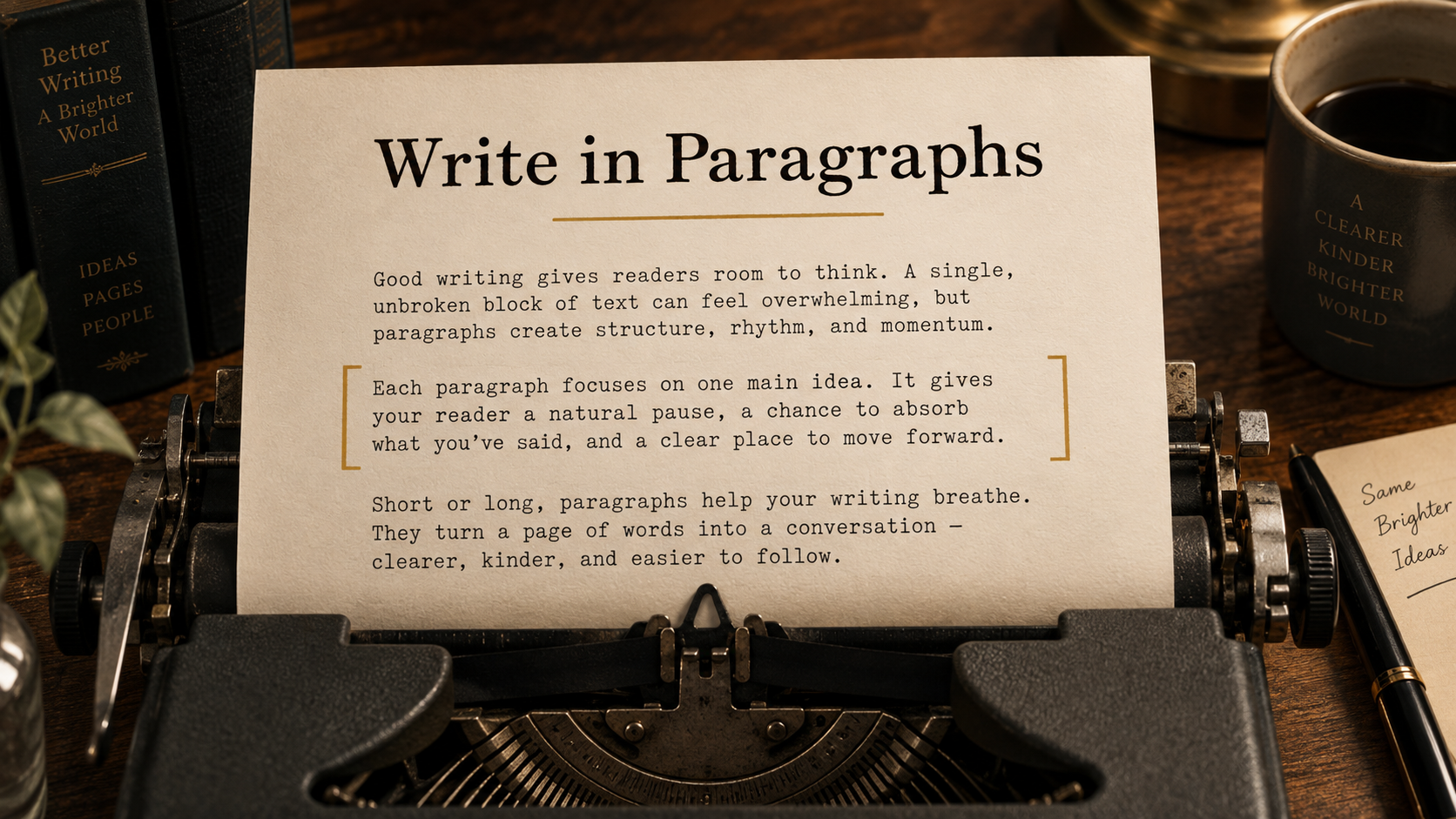
Rule #13 in Strunk & White still holds: “Make the paragraph the unit of composition.” Don’t think of your writing as a collection of words or even sentences, but paragraphs. Each paragraph should present One Complete Thought — one idea, one step in the story you’re telling or the argument you’re making. Paragraphs signal all this simply by how they look. The line break and indentation tell the reader, We’re done with the previous idea and moving on to a new one. Take advantage of those visual cues as you draft and revise your work. Open paragraphs with some kind of topic sentence to tee up what follows. Close them with a good kicker that polishes off the point or springboards readers into the next paragraph. You can even outline your piece this way — plan one paragraph for each main point in your outline. Readers read in paragraphs, so writers should write in paragraphs too. Until next week… keep writing.
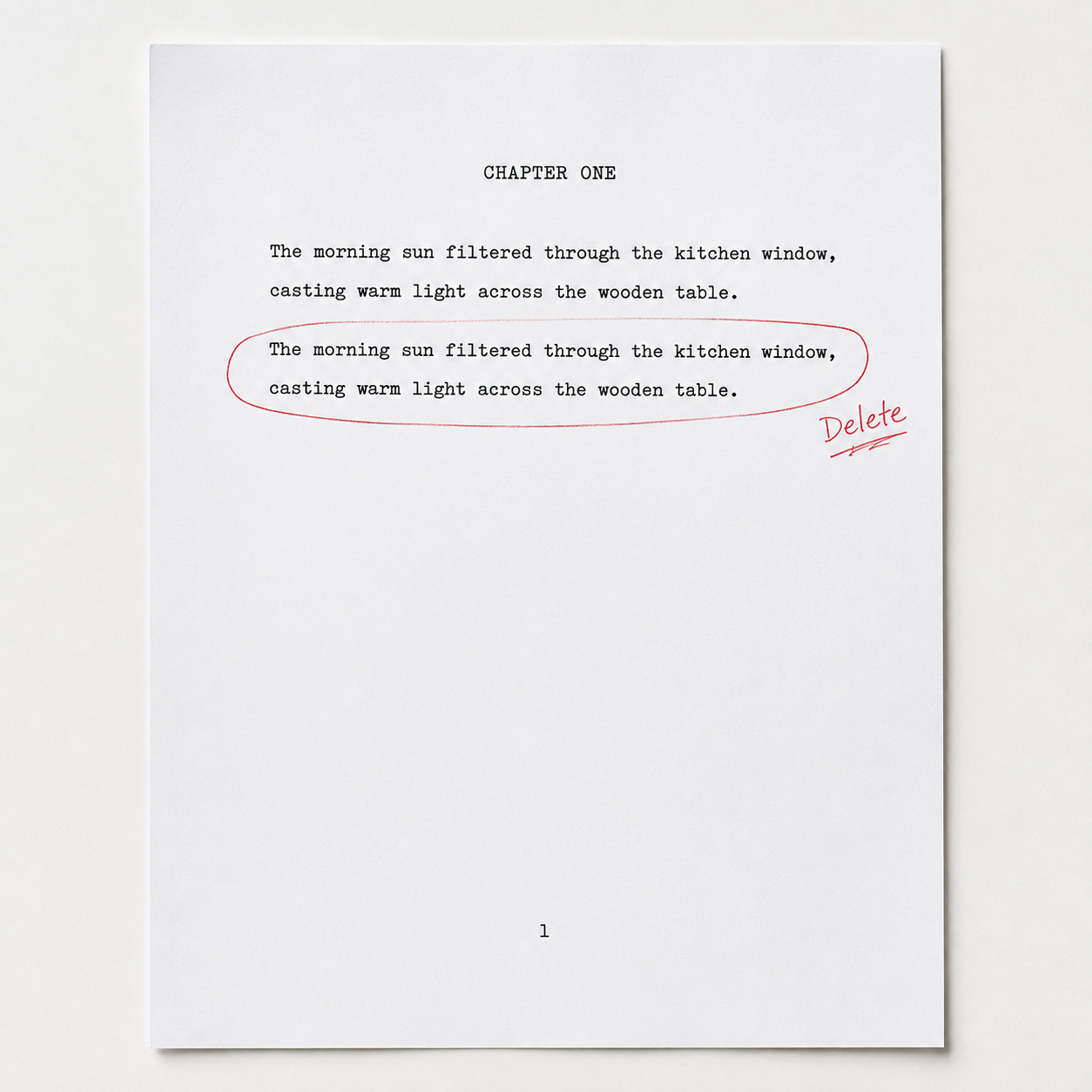
When writing first drafts, writers are usually still working out what we think. One result is duplicate sentences. We unconsciously state the same thought in different ways, often back to back. Just like the two previous sentences! Or consider these examples: This bill will only raise taxes on people making more than $1 million per year. It won’t raise taxes on anyone making less than seven figures. The hotel was farther from the city than we expected. We were surprised by how long it took to get downtown. This kind of repetition is natural in conversation. But good writing doesn’t ask readers to pay for the same real estate twice. When editing your writing, be on the lookout for twin sentences. Pick the one that sounds best, or take the best from each to form a better one, and delete the rest. Until next week… keep writing!
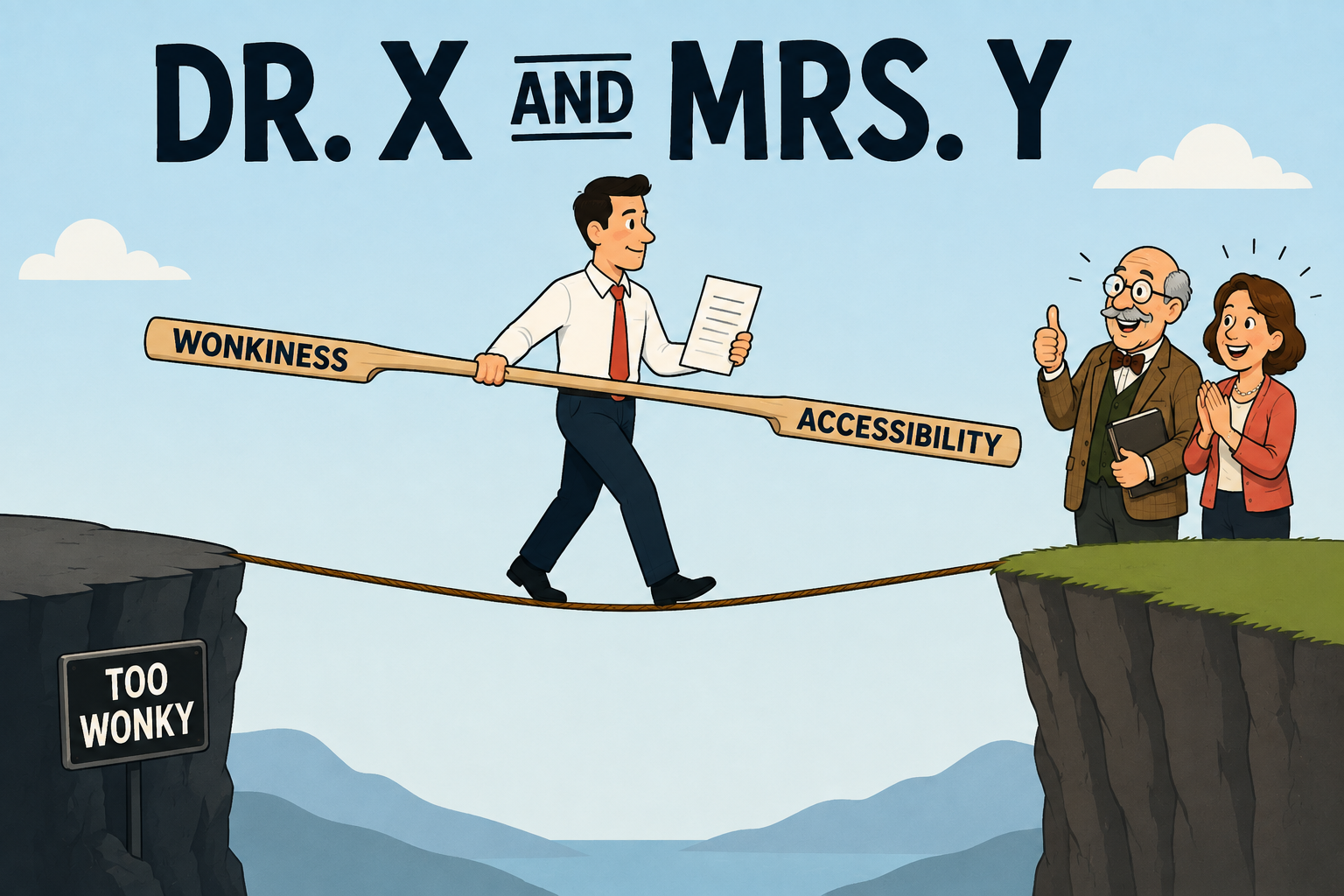
The hardest part of writing about public policy is making substantive arguments without getting lost in the weeds. Disagreements over policy minutiae in a speech or op-ed have reduced more than one congressional office to a Hobbesian state of nature. So here are two tips for finding the right balance between wonkiness and accessibility. Tip #1 : Ask yourself who your audience is. If they are experts, then write wonky. If they’re laymen, make the language more accessible. If the answer is somewhere in between, Tip #2 is that when you have to write for both, write to both. Think of your audience as two particular people: Dr. X, a world-renowned expert on your topic, and Mrs. Y, a smart, educated, and curious layman. Set your tone, choose your words and emphases, and present your argument and evidence in such a way that it won’t bore Dr. X or bewilder Mrs. Y. Provide enough context so non-experts can follow along, but not so much that experts will feel their intelligence insulted. If you can connect with both Dr. X and Mrs. Y, you’ll connect with everyone in between them too. Until next week… keep writing!
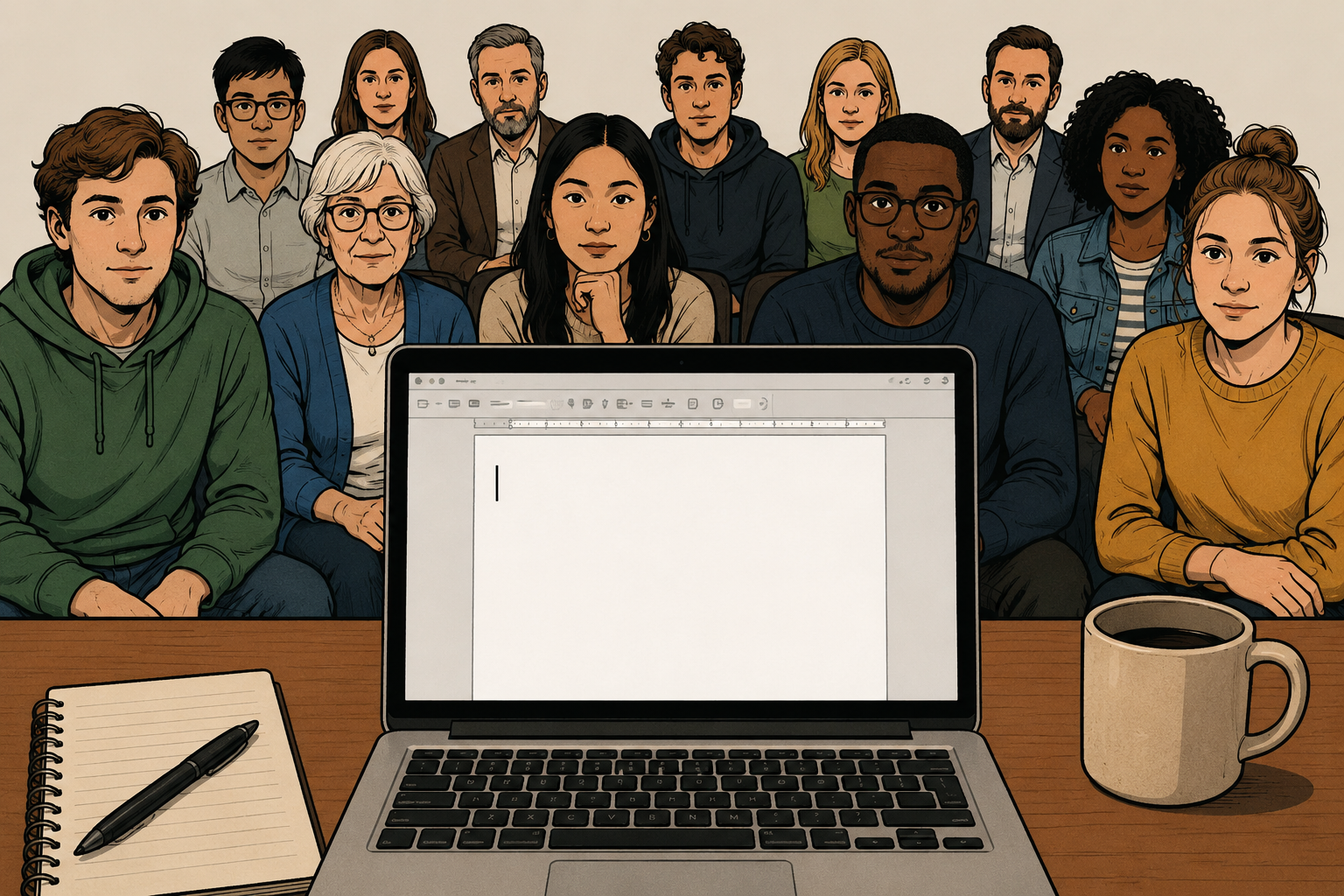
One of the most powerful writing tips anyone can learn is to never just write . Always write to an audience . Before you write word one, before you even outline your composition, clarify in your mind, as specifically as you can, who your reader is. Is it your teacher? Your boss, coworker, or subordinate? A friend, sibling, or parent? A romantic prospect? A business, nonprofit, or government agency? If your audience is a group of people, what kind of people? Are they religious? Educated? Wealthy or poor? Idealistic or cynical? Young or old? Male or female? Conservative or progressive? Knowledgeable or unfamiliar with the topic? If you were talking with these people, you would adjust your tone, word choice, and sentence structure based on who they are. Do the same with your writing. If you want to connect with your audience, you have to know who they are and how they think. Take the time to figure that out before you start writing. It will make your drafting smoother and your drafts better, guaranteed. Until next week… keep writing!
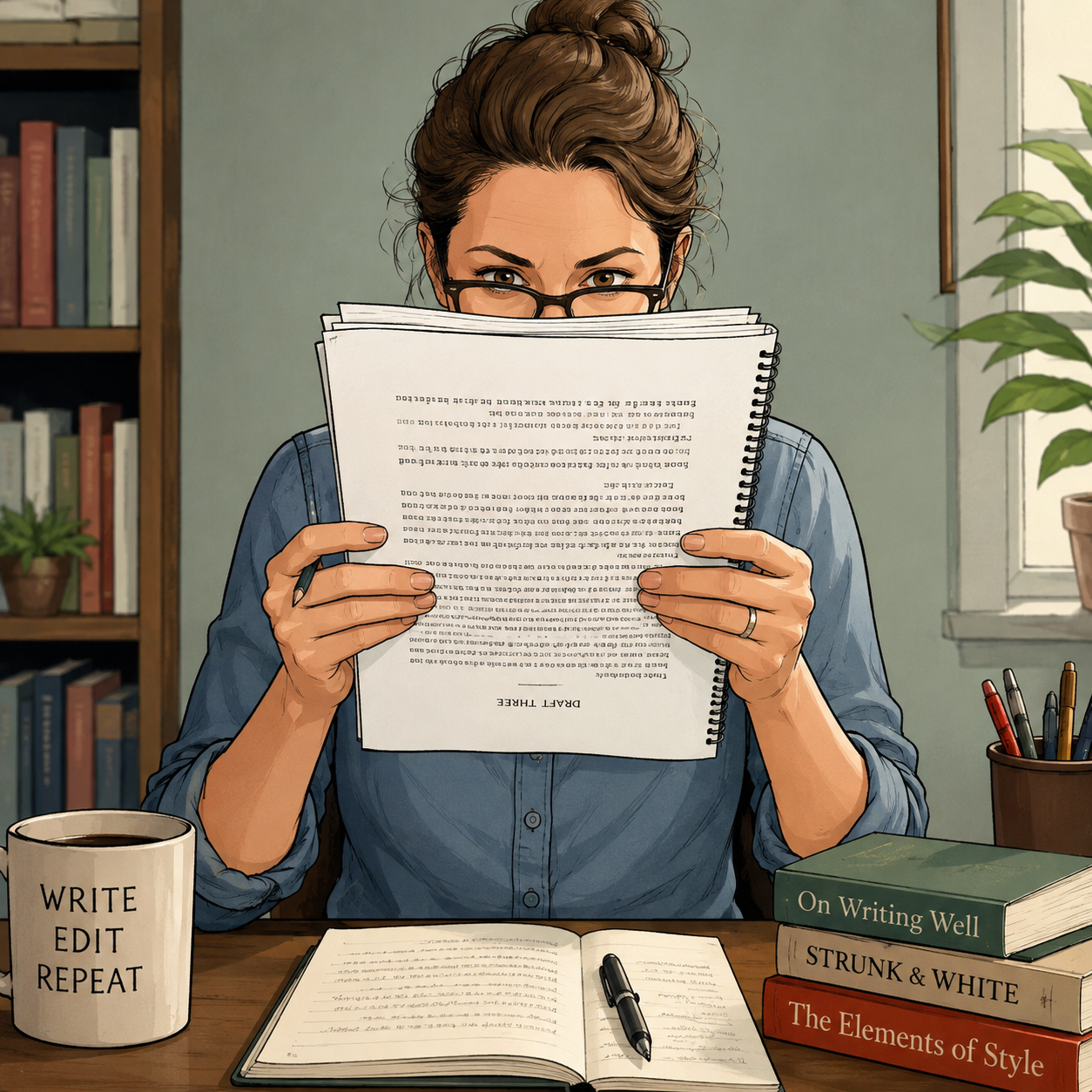
The biggest challenge of editing our own writing is that we know what we meant to say. When we read our own drafts, our brains fill in gaps and “correct” mistakes, tricking us into seeing what we intended to write rather than what’s really on the page. One way to overcome this is to proofread backwards . If you’re working on draft three or four and are starting to get too familiar with the text to see it clearly, try reading the sentences in reverse order. Start with the last sentence, then read the next-to-last, and so on until you reach your intro. Proofing backwards breaks the logical flow of the writing, so you can consider each sentence in isolation. You’ll still need to edit forward for structure, coherence, and flow, of course. But once the forest is in good shape and you’re down to the trees or the leaves — typos, extra words, stray punctuation — proofing backwards is a great way to look at your own work with fresh eyes. Until next week… keep writing!

The Nib this week is simple: read Bret Stephens’s New York Times column, “I’m Begging You: Never Write with AI." For those on this side of the paywall, Stephens’s argument is not about the quality and inauthenticity of AI writing. Rather, it’s about what we lose — as thinkers and as people — when we outsource our writing to a machine. “The problem with writing with A.I. is that it’s mentally enfeebling — an escalator toward a result when you really need to make a daily habit of taking the stairs. As it becomes ubiquitous, it undermines not only our individual ability to write but also a society’s collective ability to reason, a culture’s inner capacity to create and everyone’s reason to care.” The task of writing: “compels us to subject our thinking to the effort of articulation, the rigor of grammar, the tests of intelligibility and coherence, the inspection of others.” Writing requires clear, disciplined thinking. That’s one reason it’s so hard. It can no more be outsourced than healthy eating or daily exercise. “We become better writers,” Stephens says, “by the constant effort that mundane writing demands.” Read the whole thing. Until next week… keep writing!
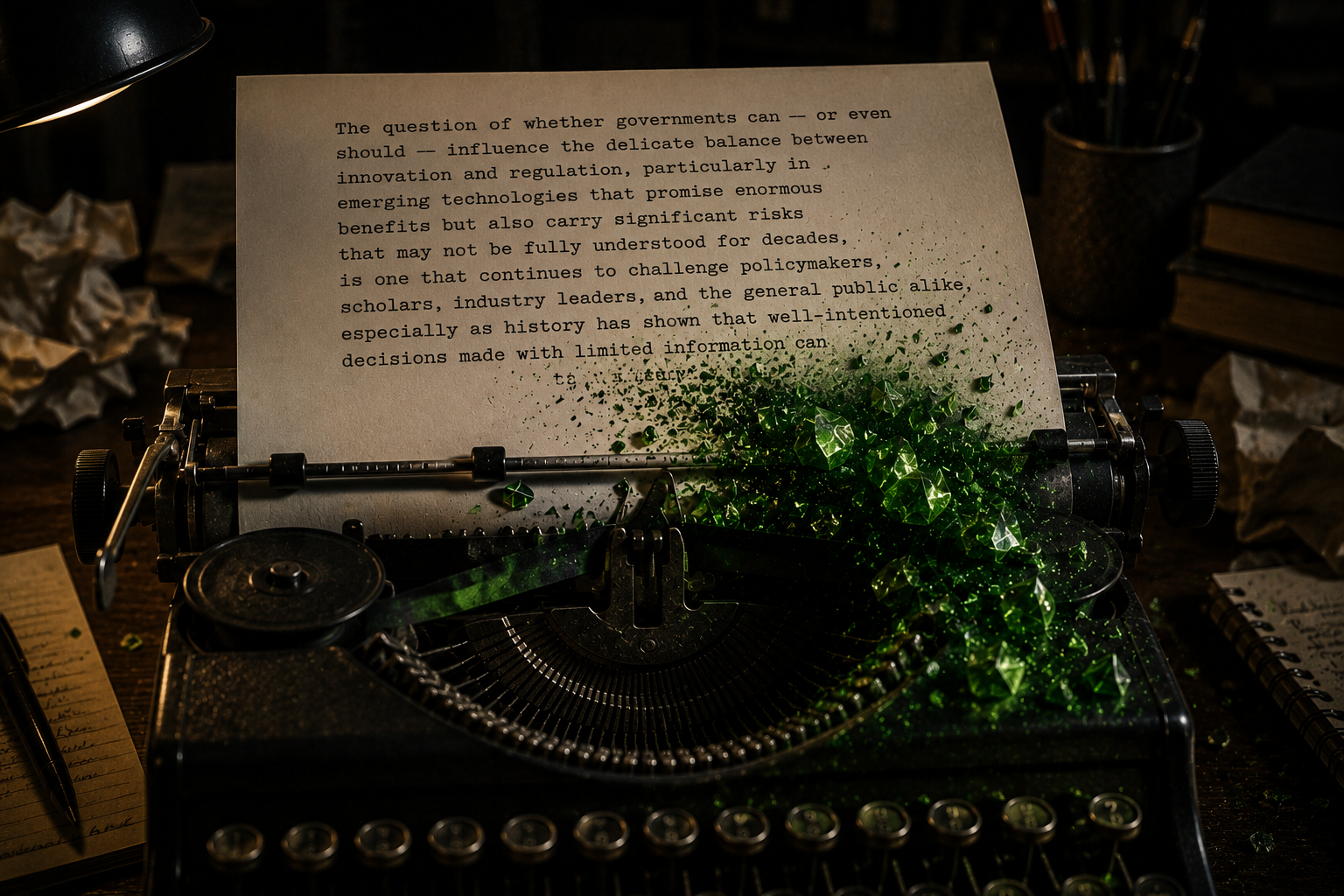
Smart writers have a weakness for overcomplicated sentences. The more ideas a writer can hold in his head, the harder it can be to present them in a reader-friendly way. If you ever find yourself writing or editing a sentence that feels overstuffed, stop and ask yourself, What is this sentence’s job? Most sentences perform one of three tasks: Saying what something is or is not. Saying what something is or is not like. Saying what something caused or was caused by. Once you decide which job the sentence needs to do, rewrite it as a simple independent clause doing that job and nothing else. Add back only what is necessary to express that one thought. Leave the next thought for the next sentence. If you’re having trouble connecting all your dots in one sentence, use two or three. Your readers will appreciate it. Until next week… keep writing!
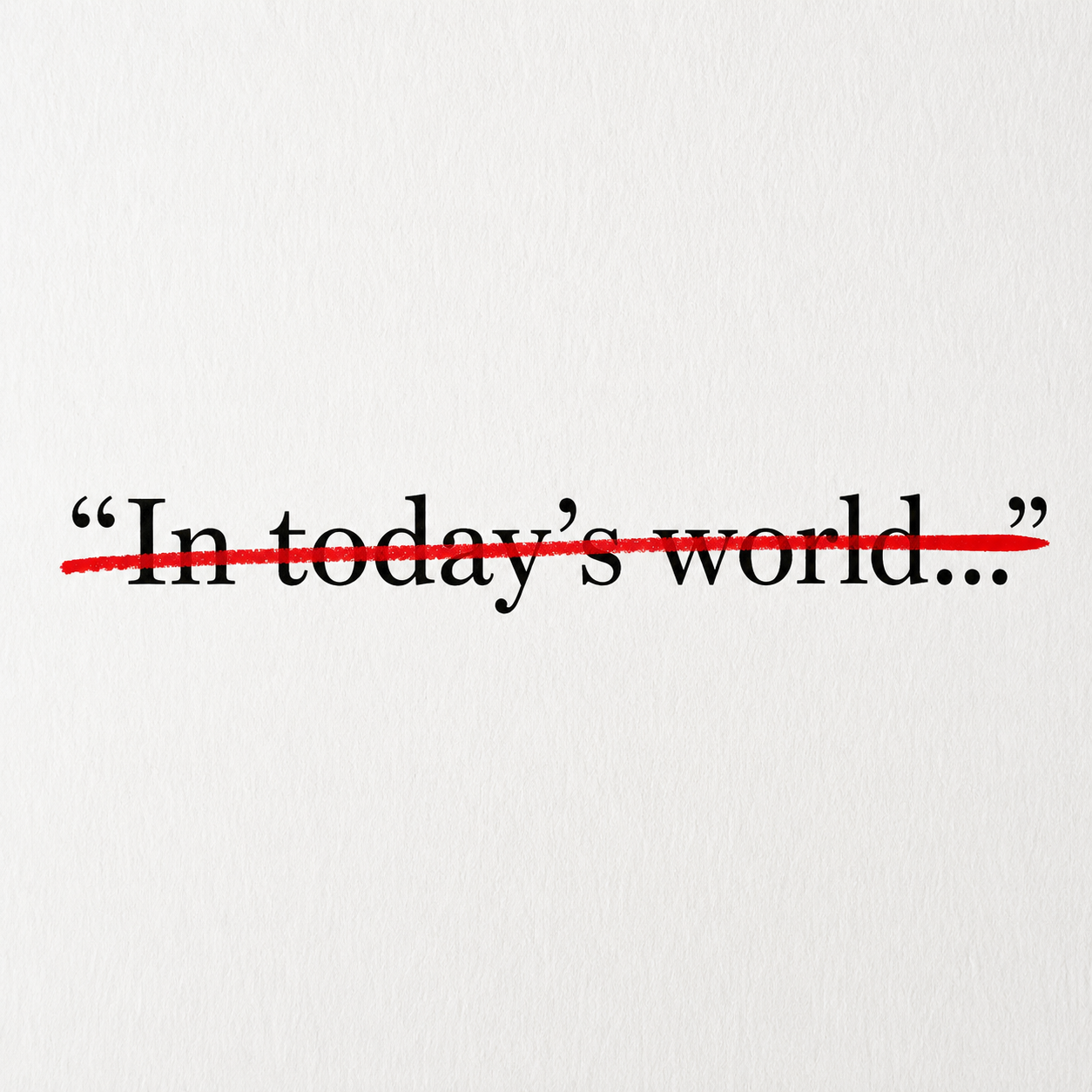
This week, another addition to the Nib’s list of phrases writers should always delete from their work: “In today’s world…” First of all, it’s just a longer way of saying “today” or “nowadays” or “these days.” And writers should always look to trim extraneous words. Second, the phrase is clunky. No confident human being in relaxed conversation ever says “in today’s world.” It’s the kind of thing we write when we are insecure and trying to fake it. Be confident. Be relaxed. Don’t let “in today’s world…” survive past your first draft. Until next week… keep writing!
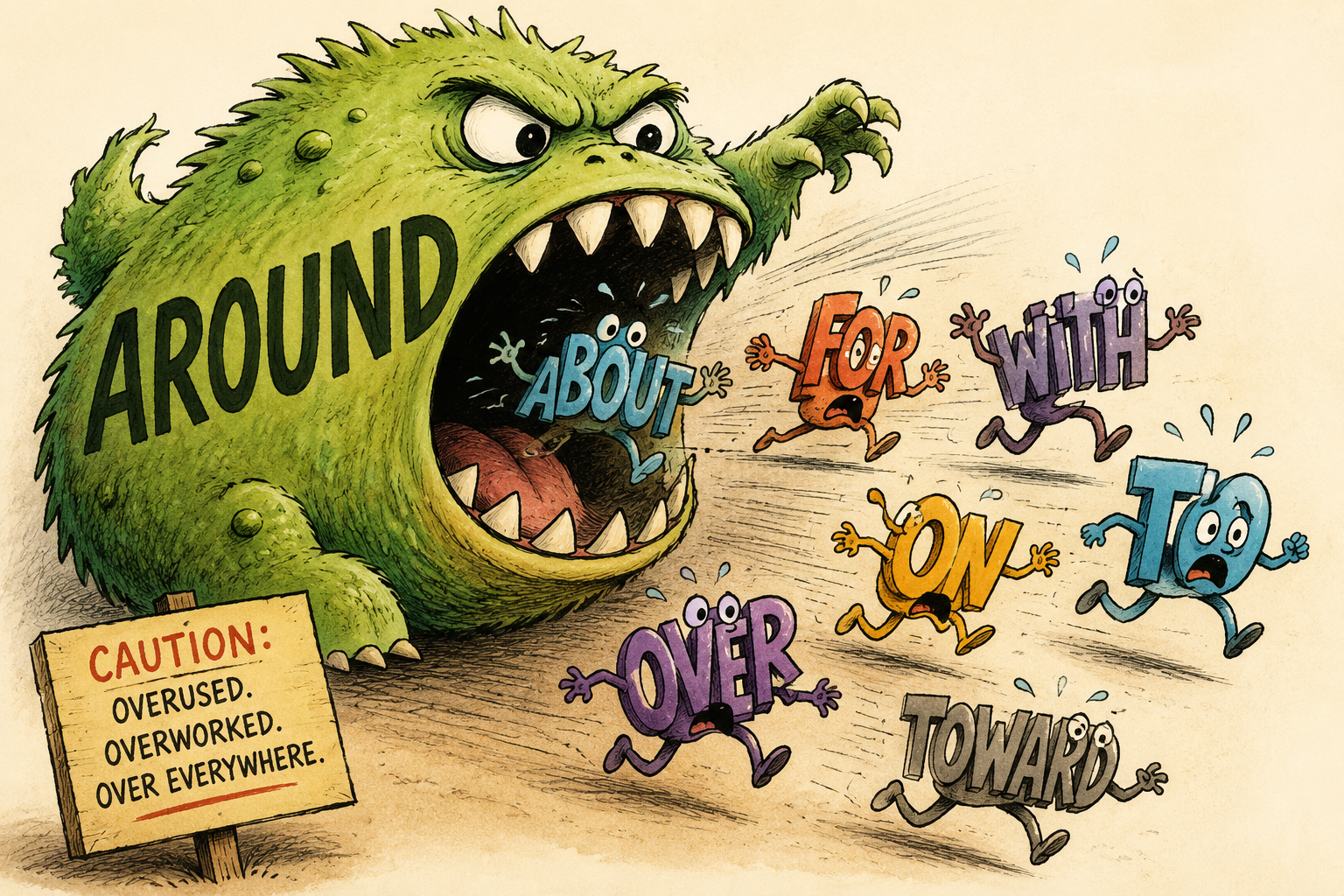
At some point in the last two decades, around became the monster that ate the other prepositions. Every day we read of “debates around immigration” and “plans around the weekend” and “coordination around fundraising.” Good writers have to fight back. Around is a perfectly good word. But it means around. It does not mean about , regarding , for , toward , with , over , on , or to . The problem isn’t grammar; it’s clarity. When one word tries to do the work of half a dozen others, communication breaks down. Writing gets sloppy and readers get confused. Luckily, there’s an easy fix. Young writers who grew up amidst the Great Aroundening should make around a yellow-flag word, like that or issue . Every time you read it in your own work, pause and ask whether another preposition would better capture the relationship you're trying to describe. Prepositional precision may seem like nitpicking. It’s not. It can mean the difference between a clear sentence and a fuzzy one, a fluid paragraph and a clanging one, and a writing sample that earns an interview instead of a rejection. Always go the extra mile for your readers, not around them. Until next week… keep writing!
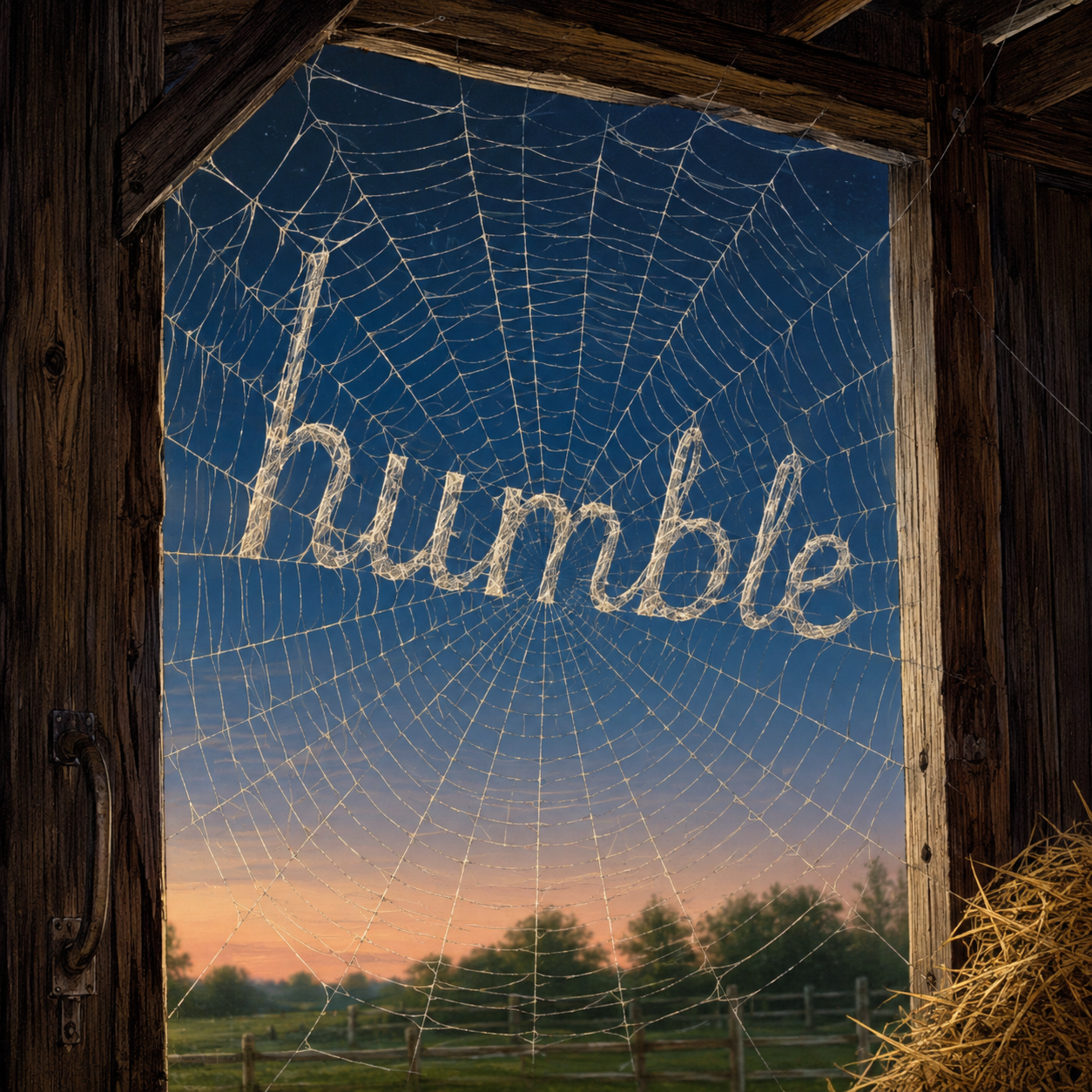
The trick to persuasive writing is that you have to change readers’ minds without putting them on the defensive for not agreeing with you in the first place. A great way to make arguments more palatable without watering them down is by using five humble but rhetorically powerful words: “It seems to me that…” Consider these three claims: City life is better than country life. Tax cuts boost economic growth. Yogi Berra was better than Johnny Bench. Now compare them to these: It seems to me that city life is better than country life. It seems to me that tax cuts boost economic growth. It seems to me that Yogi Berra was better than Johnny Bench. The assertions remain the same. But see how open and gracious the sentences become? Now imagine you prefaced each with a fact or two backing up the claim. All of a sudden, you have a confident, forceful argument that nonetheless draws your audience in by proposing rather than imposing your conclusion. When backed by evidence, humility and generosity are much more persuasive than swagger. “It seems to me that…” invites your audience to agree with you, which is the surest way to get them to yes. Until next week… keep writing!