Nib #124 Beach Reading to Improve Your Writing

Young writers often feel confronted by a dilemma when picking their summer beach books: fun trash or serious literature. But it’s a false choice!


Genre fiction — however light, however formulaic — boasts some of the best writing ever published. There are crime novels, screwball comedies, and adventure stories so crisp and nimble that they will (without you even knowing it) sharpen your mind while you’re flying through the pages under the summer sun.


If you have never read Elmore Leonard or Donald Westlake’s comedy crime capers… or Patrick O’Brien’s Aubrey-Maturin naval war stories… or P.G. Woodhouse’s “musical comedies without the music,” you are one of the lucky ones who still gets to experience them for the first time!


Patricia Highsmith and Agatha Christie were tremendous writers who just happened to write mysteries. J.K. Rowling’s post-Potter whodunits and John le Carre’s spy novels soar above their “genre” labels. W.C. Heinz’s boxing novel, The Professional, is as good as writing gets.


Beach reads don’t have to be cotton candy. And serious literature doesn’t have to be Brussels sprouts. This summer, treat yourself to the delicious, nutritious superstars of genre fiction.


Until next week… keep writing!
June 12, 2026
There is nothing wrong with “to be” verbs — is , are , were , was , am , etc. Sometimes they’re the right word (like in this sentence!). But often “to be” verbs hide the right word. Consider: The Senator is a supporter of gun control. The storms were responsible for the delayed flights. In each case, an action verb can convey the same thought in a tighter, livelier sentence, like: The Senator supports gun control. The storms delayed the flights. Active verbs give your nouns something to do. And when your nouns move, so does your writing. So next time you’re editing something you wrote, circle every “to be” verb and then re-read the sentence. See if there is an active verb in the second half of the sentence masquerading as a noun or an adjective, like in the examples above. If swapping that verb in for the “to be” one makes the sentence brisker and more vivid, congratulations: you just learned a way to improve every paragraph you ever write. Until next week… keep writing!
June 5, 2026
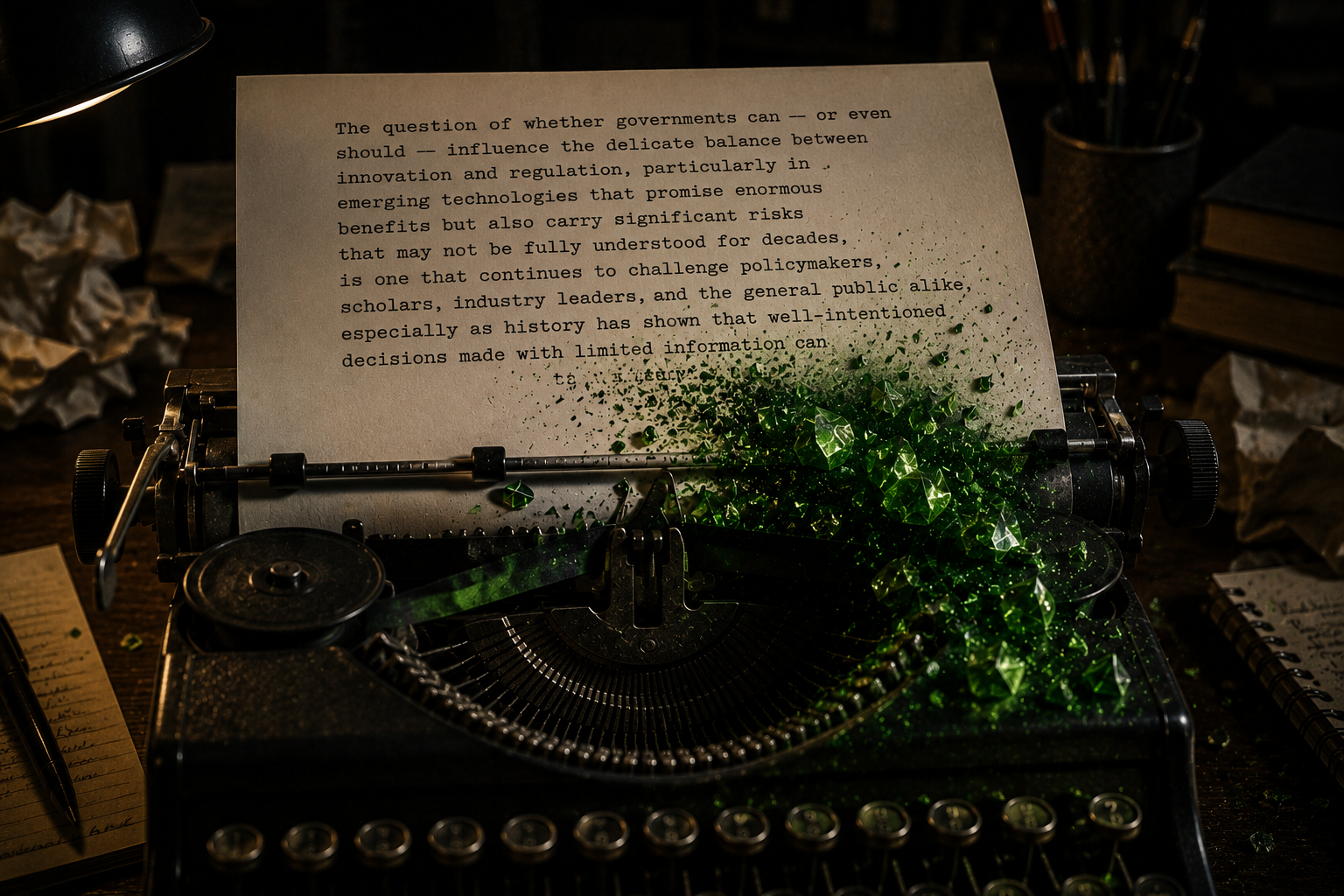
For all the rules against using AI in your writing, there is one way all young writers should be using it: finding typos. AI apps are excellent at identifying the kind of mistakes that our eyes might overlook. Think misspelled or repeated words, doubled-up prepositions, that kind of thing. Writers get worse at finding these things after a few reads because familiarity with the text dulls our proofreading eyes. So when you have edited something yourself a few times already, have AI scrub it -- not for content, just for typos. Never have the app make the changes for you. Tell it to give you a list of typos it found, and then enter the changes yourself. That way you will always hold pen and own every correction yourself. Until next week… keep writing!
May 29, 2026
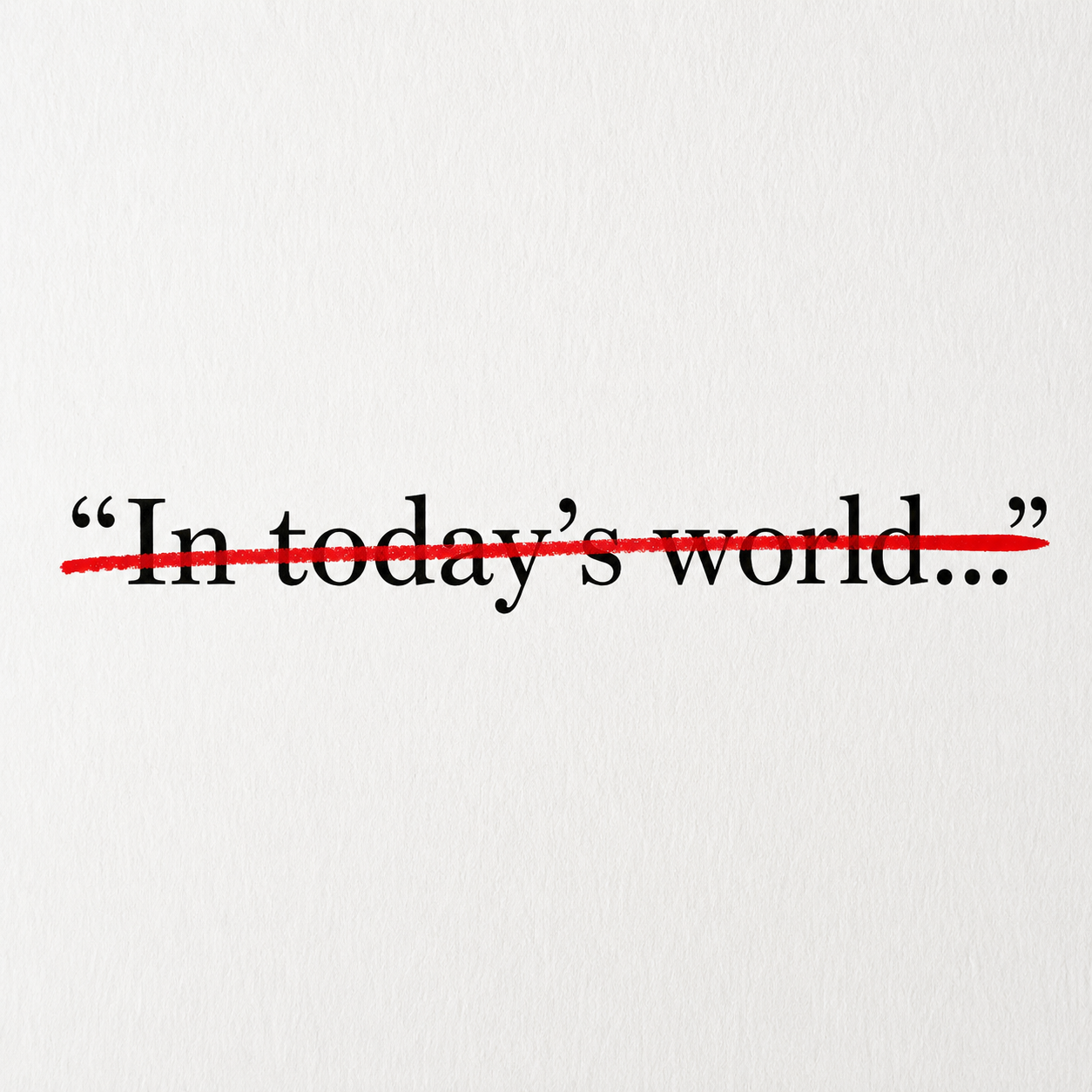
Reading is hard enough when words’ meanings are fixed. When they are fluid, it’s like trying to play catch in the dark. Young writers who want to join the rearguard fight for clarity against confusion can start with these five words that almost everyone misuses these days: 1. Enormity means terrible sin, not scope. So don’t refer to the “enormity of America’s victory in the Cold War” unless you’re a communist. 2. Unique means one of a kind, not rare. Never say “pretty unique” or “very unique.” Something is either unique or it’s not. 3. Nauseous describes things that make one nauseated ; it doesn’t mean sick at the stomach. As Strunk & White put it, “Do not, therefore, say, ‘I feel nauseous,’ unless you are certain you have that effect on others.” 4. Disinterested means impartial, like a judge. Uninterested means indifferent to, like the way people feel about professional lacrosse. 5. Finally, to imply means to hint at or suggest something as a writer or speaker. To infer means to conclude, as a reader or listener, what a writer or speaker might be implying. Always remember, precision in writing isn’t about pedantry; it’s about generosity toward one’s readers. Until next week… keep writing.
May 15, 2026
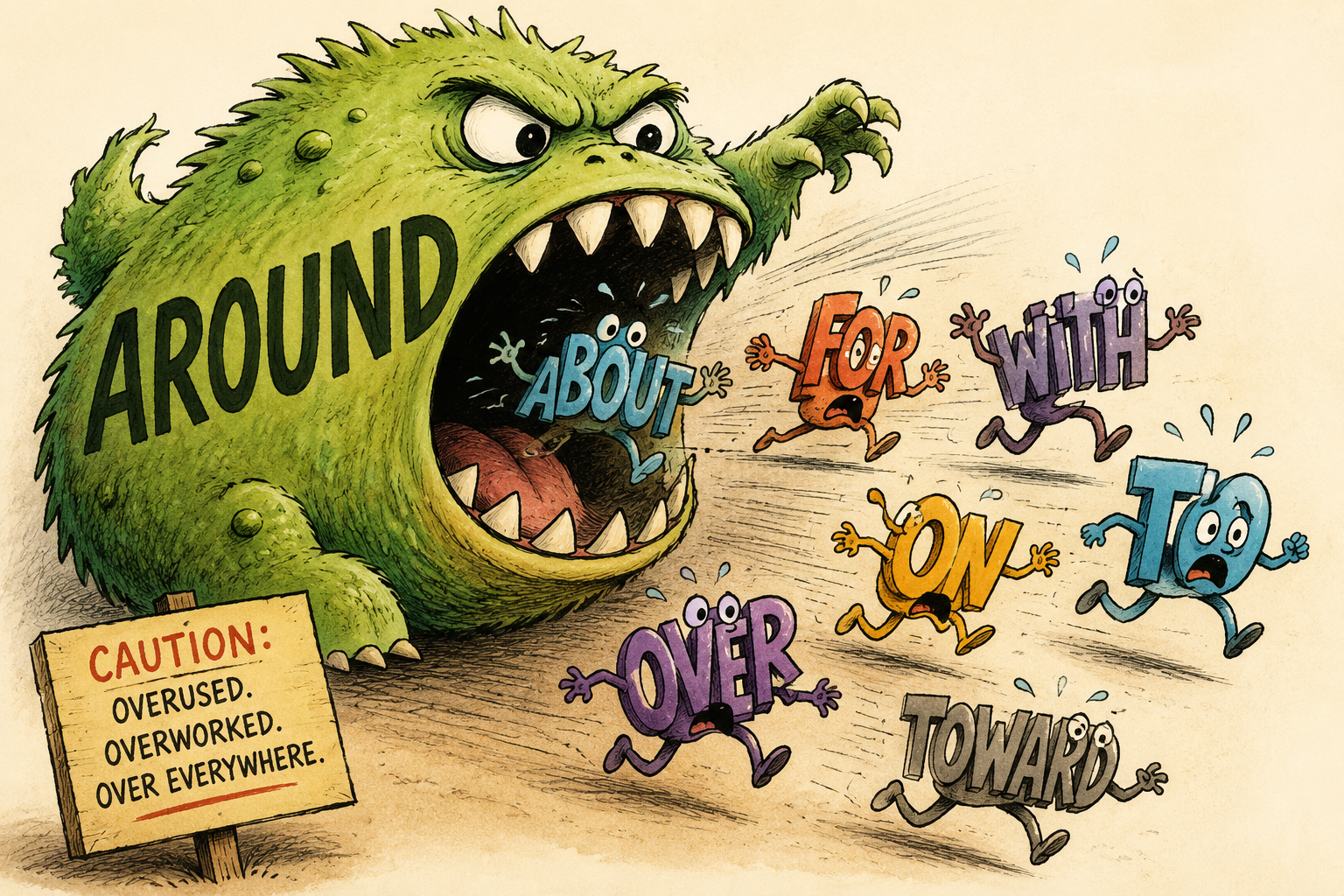
ChatGPT’s notorious overuse of em-dashes has led many young writers to foreswear them so their writing won’t look lifted from AI. They should not. First of all, em-dashes are good! If you write sentences longer than 15 words, you’re going to eventually need them. Using five commas to set off two clauses, an appositive, and a parenthetical in one sentence is confusing to readers. Moreover, em-dashes are not the problem with AI writing! It’s the bland, superficial, bloodless prose. In a world where everyone can now produce that kind of polished slop, the best way for young writers to distinguish themselves is through the clarity of their perspective and the authenticity of their voice. Be real. Be wrong, even. But be human. Go ahead and use those em-dashes. Just make sure you write the rest of your stuff, too. Until next week… keep writing!
May 8, 2026
All writers should prefer concrete details to broad generalities. Specifics — blue jay rather than bird or pleated khakis over pants — are more vivid, explanatory, and just make for livelier writing. For conservative speechwriters, specifics are absolutely essential. Why? Because the press will deliberately misinterpret every sentence of your writing that they can. Loose, general statements — no matter how innocently intended — are easy to twist. If you write, “Under Joe Biden, illegal immigrants flooded across the border.” the press will write, “Conservative congressman compares people of color to natural disaster.” They can’t do that with straight factual claims like, “Joe Biden let 10 million illegal immigrants into our country in just four years.” This may feel restrictive, but it’s really empowering. Facts are more persuasive than flourishes. And they can reach larger audiences because they don’t get memory-holed by newsroom gatekeepers. Clear, concise conservative arguments are bracing enough without literary devices. Trust your substance, and the style will take care of itself. Until next week… keep writing!

May 1, 2026
Good writing is downstream from clear thinking. The vast majority of times writers get stuck mid-composition, tugging at their hair and chewing pencils wondering what to write next, the real problem is they’re not sure what they think . The fix here is not grammatical or stylistic, but logical. The next time you find yourself in this situation, try the One Sentence Trick. Very quickly, summarize your whole argument in a single sentence. Then summarize each component part — each angle, each bit of evidence, each rebuttal of the other side, and then your conclusion. Essentially, you’re reverse engineering your outline here. If any of these summary sentences proves hard to write, you’ve found your problem. Chances are you’ve thought and/or written yourself into a corner. In such cases, the best way out is not through, but back. Return to the outline, to the previous sentence, or the previous paragraph and start reading. Somewhere along the way, you just took a wrong turn. Find the wrong turn, and you’ll quickly get back on track. The key is cultivating the discipline and humility not to push on to try and “get there from here.” You’ll waste words and time. Back up, find the hitch in your logic, and you’ll be back in the flow in no time. Until next week… keep writing!
April 24, 2026
Congressional leaders tend to think of big policy debates as binary affairs — support Bill X or oppose Bill X. If they had their way, every elected official, pundit, or spokesman on their side would repeat the exact same two-sentence talking point. They call this “message discipline.” Except that’s not what message discipline is. Message discipline is when each spokesman sticks to his or her best message over the course of a debate. It does not mean that 300 different spokesman all parrot the same message. If Ted Cruz and Susan Collins — or for that matter, Elizabeth Warren — both support something, you don’t want them making the same case for it. You want them making distinct cases tailored to the audiences they can best reach. Young congressional communicators: don’t work forward from the messaging of the speaker or the committee chairman or that one pundit you like. The people who you’re trying to reach may not trust those guys! Instead, work backwards from your boss’s audience and make the case that will appeal to them . When it comes to strategic communications, intentionally saying something a little bit different is a lot more effective. Until next week… keep writing!
April 17, 2026
If you look up the words whom , whomever , and whomsoever in the dictionary, you’ll find them. It’s probably best to leave them there. Don’t get the Nib wrong. Relative pronouns are great. Direct objects, too. And in isolation, whomsoever is a peach of a word. But in most real-world writing, sentences requiring whom — and especially whomever and whomsoever — tend to be wordy, fussy, and distractingly pedantic. The Nib endorses William Safire’s old rule of thumb: “If whom is correct, recast the sentence.” Until next week... keep writing!
April 10, 2026
 In a public debate, whether in person or in writing, remember: your strategic audience isn’t your opponent. It’s the undecided, persuadable people witnessing your back and forth. This is why it’s so valuable to be generous and charitable in your tone and arguments. No, a softer touch isn’t likely to move hardened, convicted advocates on the other side. But it absolutely might help reach undecided readers and listeners. Trial lawyers don’t try to convince opposing counsel. They’re focused on the judge or the jury. In the same way, conservatives and liberals on the Senate floor aren’t debating for each other’s votes, but for the support of undecideds watching at home. In your writing, then, don’t be afraid to tailor your arguments, acknowledge the other side’s best ideas, concede unessential points, or refrain from taking tempting pot shots. Especially if your opponents are strident and censorious, a charitable tone can go a lot further than answering in kind. Respect and generosity in persuasive writing isn’t weak, it’s persuasive — which, remember, is the whole point. Until next week… keep writing!
April 3, 2026
Easter, the most beautiful thing, has understandably inspired some of the world’s most beautiful writing, including this: "Good Friday” by Christina Rossetti Am I a stone, and not a sheep, That I can stand, O Christ, beneath Thy cross, To number drop by drop Thy blood’s slow loss, And yet not weep? Not so those women loved Who with exceeding grief lamented Thee; Not so fallen Peter, weeping bitterly; Not so the thief was moved; Not so the Sun and Moon Which hid their faces in a starless sky, A horror of great darkness at broad noon – I, only I. Yet give not o’er, But seek Thy sheep, true Shepherd of the flock; Greater than Moses, turn and look once more And smite a rock. Happy Easter! And until next week… keep writing!