Nib #103 The Hidden Lessons of Thank You Notes

Merry Christmas, and — now — Happy Thank You Note Season!


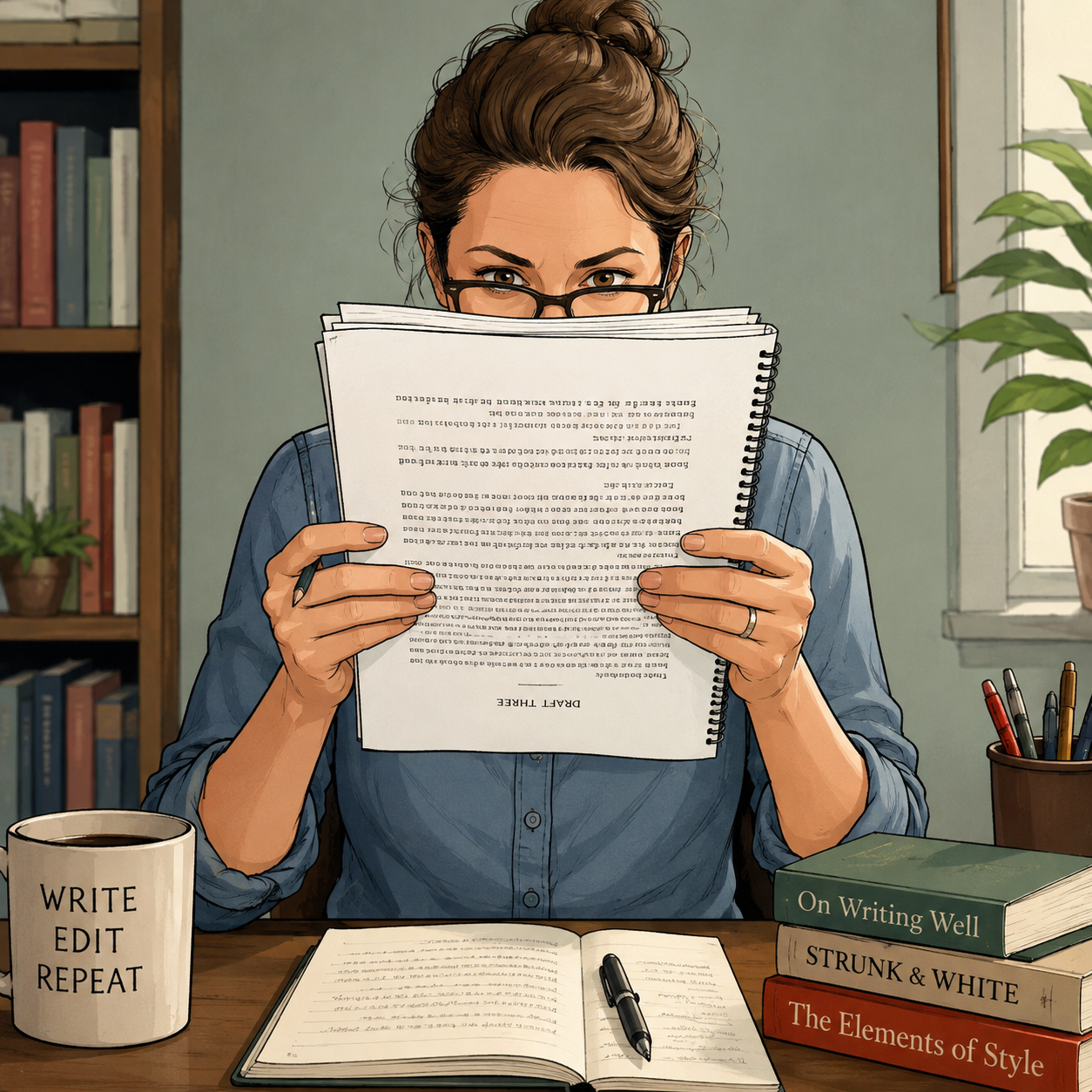
Thank You Notes might seem like a perfunctory, mechanical writing format. But they are as powerful a training ground as any prose project young writers can tackle.


Think about it. The four qualities of a good Thank You Note are cornerstones of all good writing:


Concision: Thank You cards’ small sizes preclude rambling. They force writers to get to the point and stay on it.


Specificity: Thank You notes demand concrete details. You don’t thank someone for “that thing you got me” or “that kind gesture.” No, you specify what you’re thankful for, exactly how and when you’re using it, and the particular good it has done. 


Authenticity: Expressing gratitude may be the most human thing human beings can do. Thank You notes by necessity draw out our truest voices. They sound like us — or rather, like the best version of ourselves.


Generosity: Thank You notes have no purpose other than to graciously serve their audience. Writing them exercises virtues that can strengthen all our writing, whatever the format, going forward.


The lessons of Thank You Note writing may be hidden, but they’re true and good. They’ll make you a better writer — in more ways than one.


Until next week… keep writing!
January 30, 2026
 Most people don’t read with deep concentration and attention, at least not at first. They skim. Young writers should anticipate this and tailor their writing for busy, distracted, half-interested audiences. The best formats to skim-Proof are non-urgent things we read quickly and silently, like: Work emails Memos Office reports Announcements & invitations To Skim-Proof your writing, try these four strategies: Front-load important information, ideally in your first sentence. Use bold letters and ALL CAPS to highlight key details. Indent numbered and bulleted lists to make long sentences and paragraphs easier to read. Edit out extraneous words and sentences. Don’t think of Skim Proofing as surrendering to our attention-deficit culture. Think of it as a literary deep core exercise. Because front-loading content, streamlining text, and breaking up long paragraphs will strengthen all your writing — even longer, closely read forms — over time. Until next week… keep writing!

January 23, 2026
When young writers ask, ”What should I read to improve my writing?” they usually mean, “Who?” And of course, there are plenty of great literary stylists young writers can learn and steal from. But for young writers in 2026 — betrayed by our thumbless education system and beset by screen distractions — the Who doesn’t matter as much as the When . If you really want to improve your writing, adhere to a simple rule: The majority of what you read every day should be more than 24 hours old. This is not to say good writers only read 19th century English novels or Homeric epics. There is plenty of great writing being produced right now. But it's not on Twitter. Don’t surrender your reading habits to an algorithm, especially an algorithm designed to make you awful. Read books. Read essays. Read poems. Read movie reviews. Yes, the quality of what you read matters. But what matters more is that you choose what you read and not the other way around. Until next week… keep writing!
January 16, 2026
Everyone knows the active voice is usually preferable to the passive voice. But most young writers are never taught why. Here are the two main reasons: 1. The passive voice is meandering. It tends to make sentences longer and harder to follow. Passive: The Constitution is something that should be followed by Congress. Active: Congress should follow the Constitution. These two sentences convey the same thought. But see how the first one is cumbersome, and almost condescending in its tone? Readers hate that. 2. The passive voice is slippery. Passive: That should not have happened. Active: I should not have done that. See how the second sentence there feels sincere and accountable while the first feels like a non-apology? That’s the passive voice at work. By deprioritizing — or outright eliminating — the subject of a sentence’s verb, it obscures responsibility for the sentence’s action. The passive voice isn’t evil. It just tends to make your sentences harder to read and you harder to trust. Until next week… keep writing!
January 9, 2026
We already covered the Magic Trick ( Nib #100 ), reading your work out loud. And its clarity corollary ( Nib #101 ), reading your work out loud as the audience . This last application of the Magic Trick is for anyone who writes for someone else: read your work out loud as your principal . It’s not necessary that every sentence perfectly mirror your boss’s patois. What’s necessary is that the writing not sound like someone else. (Especially you !) Don’t make references or use words or tell jokes or stories that your principal wouldn’t. The third time you read your the work out loud, imitate the person actually speaking or signing the text. When you trip over a phrase — however perfect it sounded in your head — or when a word choice snags like a fingernail on a blanket, change it. That’s how you put the ghost in ghostwriting. Until next week… keep writing!
January 2, 2026
Happy New Year! To kick off Year Three of the Nib, here are three can’t-miss New Year’s resolutions to improve your writing in 2026. 1. Memorize one poem per month. Poetry is literary protein — writing at its most nutritive and muscle-building. To truly benefit from a poem, you have to know it by heart. If you’re not sure where to start, you can’t go wrong with the King James Version of Psalm 23. 2. Read a Jane Austen novel. It doesn’t matter which, but Pride and Prejudice is Pride and Prejudice for a reason. 3. Delete one shiftless, no-account word or phrase from your writing. Good options include vague intensifiers like very or significant, robot verbs like affect or engage , and clunky stutter-steps like the fact that or in terms of . Really want to make the world a better place in 2026? See if you can go the whole year without writing the word impactful . Until next week… keep writing! 
December 19, 2025
Just in time for the big day, here are the Nib’s Top 10 Christmas Gift Ideas for the young writer in your life: 1. Good Books about writing For everyone: The Elements of Style by William Strunk and E.B. White For serious writers who have already read Strunk & White: Style by F.L. Lucas For more casual readers and writers: On Writing by Stephen King 2. Good Writing tools Pens: Every writer has a favorite, but when in doubt, go with the Pilot G-2. (Bonus: writers always appreciate red pens for editing.) Typing stands & clipboards: Out of fashion, but indispensable in the editing process. Notebooks: This is the can’t-miss option. Writers love notebooks, of every shape and size. It can be a marble stitch job from Staples or a leather-bound moleskine — your writer will feel understood. 3. Masters of Style Anything by: Tom Wolfe, especially the early stuff. W.C. Heinz, sports columnist and author of The Professional . Elmore Leonard, a master genre fiction writer. Patrick O’Brien, author of the Aubrey-Maturin novels. 4. The All Timers Shakespeare, Austen, Dickens, Homer. No writer will regret gifts with their names on the spine. 5. Reference Books Every writer can use a good dictionary, thesaurus, rhyming dictionary, a book of famous speeches, or a big book of quotations. One out-of-left-field recommendation every word lover will treasure: The Joys of Yiddish by Leo Rosten. 6. Great Conservative Writers For the young conservative writer trying to learn how to martial the English language for his cause, a few role models to learn from: Antonin Scalia Yuval Levin Patrick Buchanan, especially Right From the Beginning Ross Douthat Clarence Thomas, especially My Grandfather’s Son 6. Accoutrements Writers like to cultivate the spaces where they write. They put comforting, inspiring, happy things on the walls and shelves that surround their desks. Thoughtful gift-givers can add to that ambiance with books, obviously, but also framed photographs or maps or art prints or quotes from a favorite writer. Maybe a pencil holder that fits your writer’s aesthetic, or faux-bronze bust of Shakespeare or a vintage typewriter from eBay. Writers love that stuff. And more than that, they love feeling loved for loving that stuff. Happy Christmas to you and yours, and until next week… keep writing!
December 12, 2025
The corollary to last week’s Nib — Nib #100 The Magic Trick — is that in addition to reading their work out loud, writers should also read it as other people. First and foremost, they should read it aloud as their audience. Remember, everything you write is written for someone else. To write compellingly or persuasively, you have to zero in on the people you’re writing for . How old are they? How educated? Where are they from? What are their politics, religious views, or interests? When you read your work out loud, put yourself in their shoes. What do you hear? Is your word choice appropriate? Is your sentence structure clear? Will they get your references and jokes? Will they share your priors or bristle at them? Will they connect the dots you want them to, or find your logic discordant? To write effectively, you have to tailor your writing to your intended audience — whoever it is. So when you edit your work, don’t just read it out loud as yourself, valuable as that practice is. Also read it out loud as the audience — they’re the ones who really matter, after all. Until next week… keep writing!
The best writing tip the Nib -- or anyone else -- can ever give you.
December 5, 2025
Ok, here it is — for Nib #100 — the single best writing tip anyone can ever give you. If you want to improve a piece of writing — a whole draft, a paragraph, or even just a sentence — read it out loud. Human beings are hard wired for talking and listening, not writing and reading. So when you edit and revise your work, read it out loud. Your ears will hear what your eyes won’t see. You’ll hear mistakes that you’d otherwise miss. More than that, you’ll hear things that aren’t necessarily wrong, but could be better. Overlong sentences, imperfect word choices, and extraneous phrases that may look fine will — when read aloud — clang in your ears like false notes. It’s like a magic trick. Even if you’re not sure why something needs to be changed, you’ll it sounds wrong and change it. No matter how good or bad your writing is, reading it loud will help you make it better: guaranteed, and right away. Until next week… keep writing!
November 28, 2025
If you’ve ever wondered when it might be advantageous to write in the passive voice, check out President Abraham Lincoln’s first Thanksgiving Day proclamation from 1863. It’s all about the blessings that Americans — despite the horrors of the Civil War — still have to be grateful for. But notice how passively Lincoln catalogs them: “peace has been preserved with all nations” “order has been maintained” “the laws have been respected and obeyed” “harmony has prevailed” “population has steadily increased” “mines… have yielded even more abundantly” Notice what’s missing in all these passive phrases and intransitive verbs? Why, the chief executive whose deft leadership delivered this bounty to the American people! Passive writing distances actors from their actions. It helps scoundrels avoid culpability, as in, “Mistakes were made.” And it helps clever leaders insinuate their own merits without directly trumpeting them, as in, “Thank heavens our nation has been so uncommonly prosperous, respected, and happy during my presidency.” That is what the passive voice can be good for: blame avoidance and humblebragging. Until next week… keep writing!
November 21, 2025
There are no great films about writing. It’s understandable. Writing isn’t very cinematic. So movies “about writing” tend to glaze the grind in sentimentality (like Finding Forester ) or hide it in weirdness (like Adaptation ). But we don’t actually need a great movie about writing. Because there is one great movie scene that covers the subject. A few minutes into A River Runs Through It , we get a 90-second vignette of future author Norman Maclean learning how to write under his minister father’s tutelage. It’s the best: